• September short stories

    I’m chuffed to have new short fiction appearing in two anthologies coming out this month.

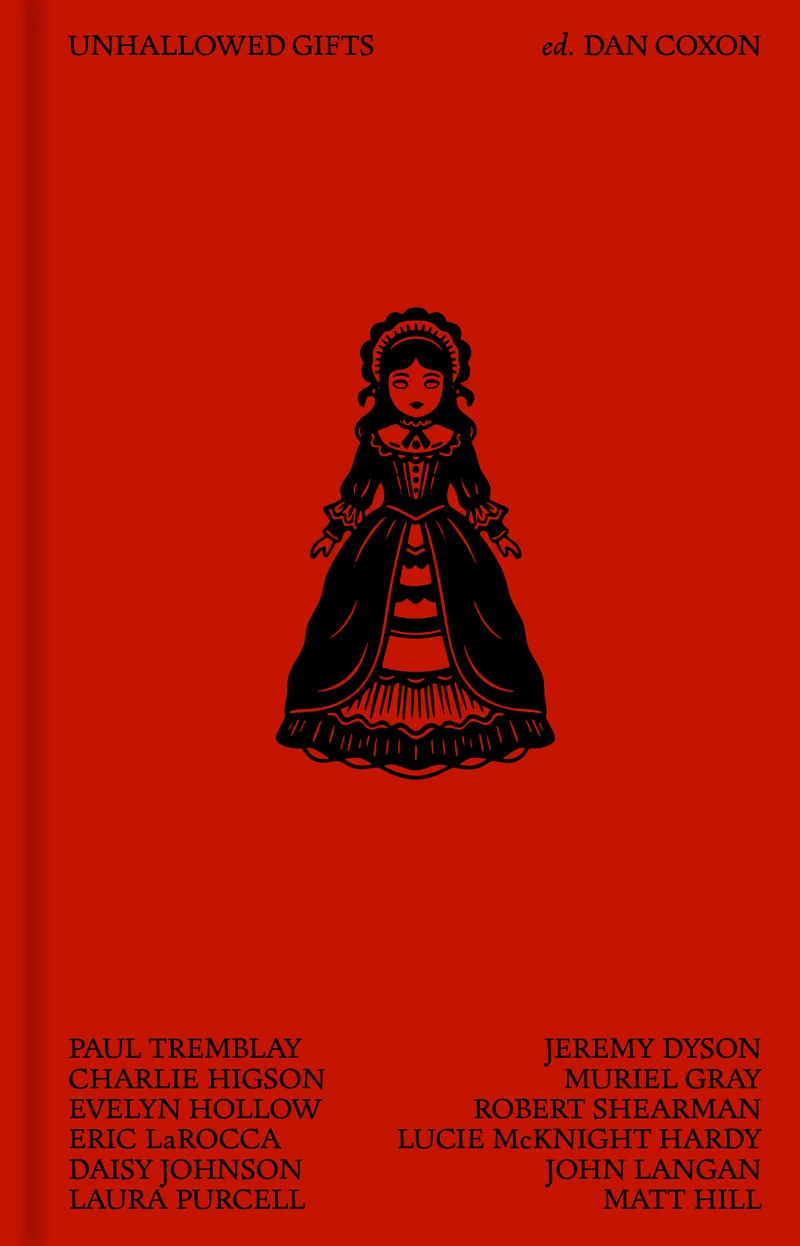
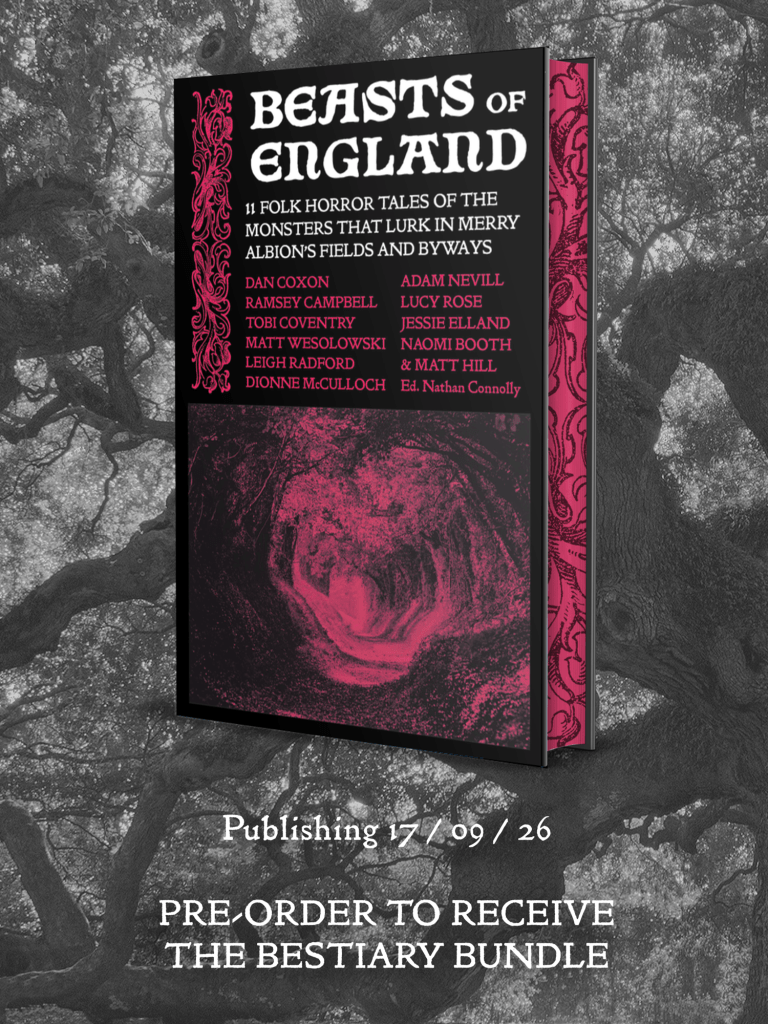
    ‘Bleaklow’ is an illustrated(!) story for Dead Ink’s Beasts of England project, which features eleven monster stories by writers from all corners of England, collected together in a special-edition hardback. 

    Prompted to search the shadows of somewhere familiar, I wrote about our adopted hometown of Glossop and the Peak District moorland we’ve made our playground over the last decade. What emerged is a take on the classic Club Story, honouring England’s only surviving mountain hare population while drawing on my recent turn as a casualty in a Mountain Rescue exercise.

    I’m over the moon to be part of this one. And you can still pre-order an incredible bundle over here.

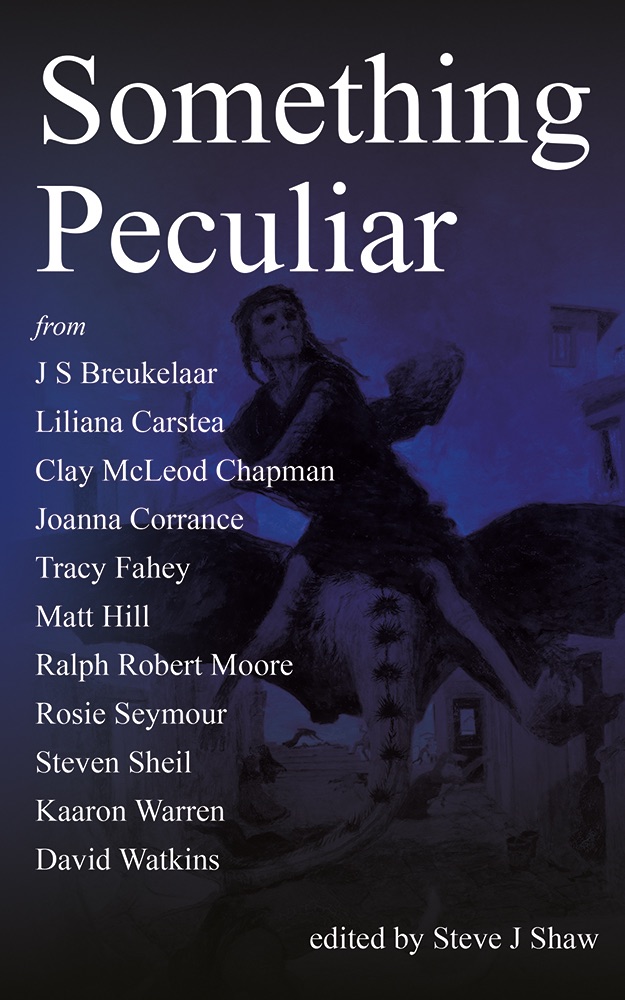
    My second story arrives at the end of the month: ‘The Calf Rooms’ will feature in Black Shuck’s annual weird fiction anthology Something Peculiar, alongside some stellar names. 

    This piece is particularly uncomfortable – a kind of sideways homage to Fowles by way of Joyce Carol Oates, maybe? – so I’m delighted it’s been given a home. 

    Pre-order Something Peculiar XI at Black Shuck Books here

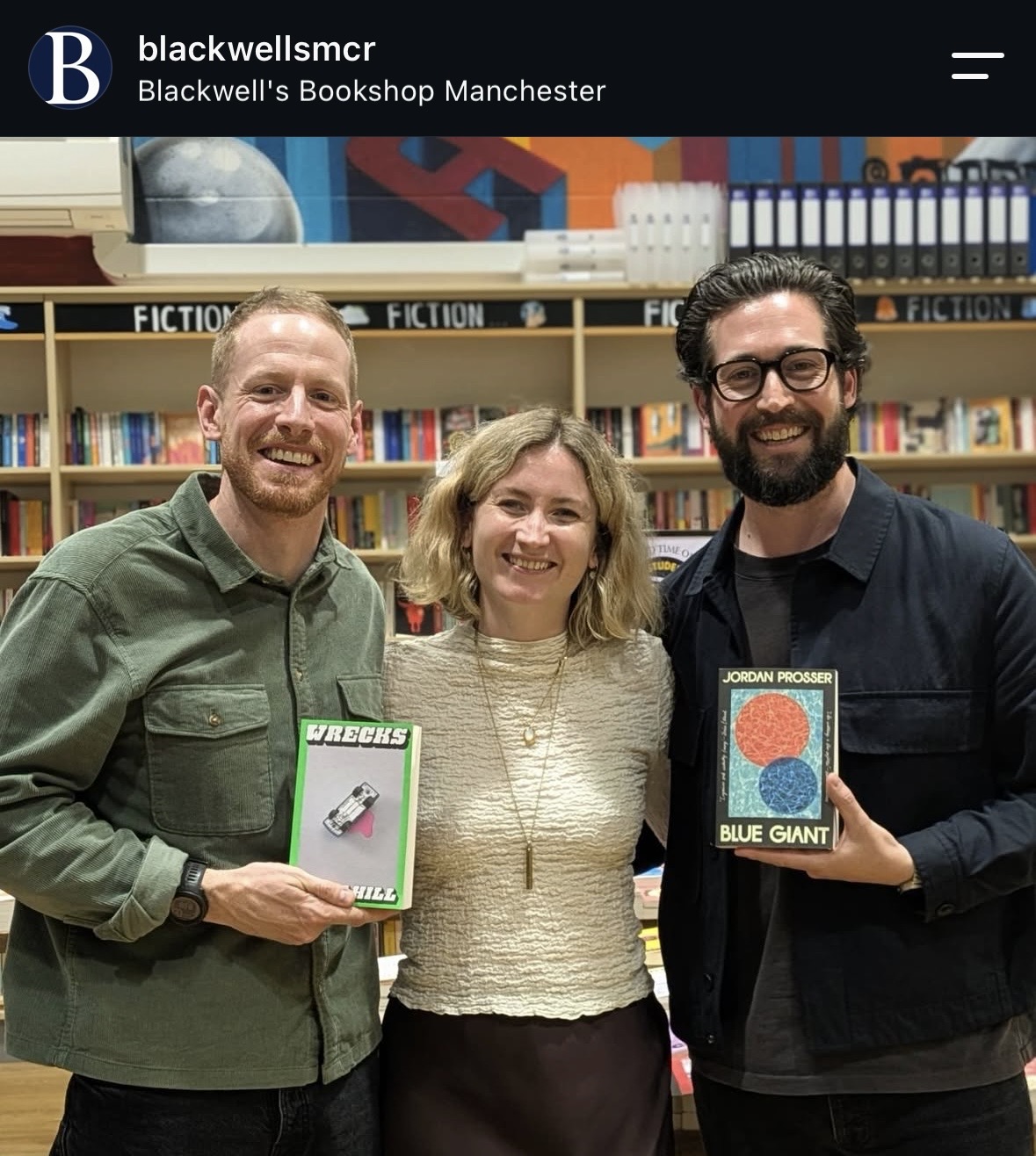
  • Wrecks off the line

    “It’s provocative, it’s daring and it’s utterly mesmerising. It will leave you startled all the way to the finish line.” – Lucy Rose, author of The Lamb

    My new novel Wrecks, a feverish speculative thriller and/or ghost story, is published by Dead Ink today. As my attempt at a publicity elevator pitch went: imagine Fincher and Ballard trying to remake Mad Max on the M1 to Milton Keynes, but the road surface keeps melting. 

    Available in print and ebook everywhere you get your good stuff, though especially sweet if you buy local.

    Thank you again to all involved. Dead Ink are doing amazing things and I’m incredibly fortunate to be on their list.

  • Seatbelts on

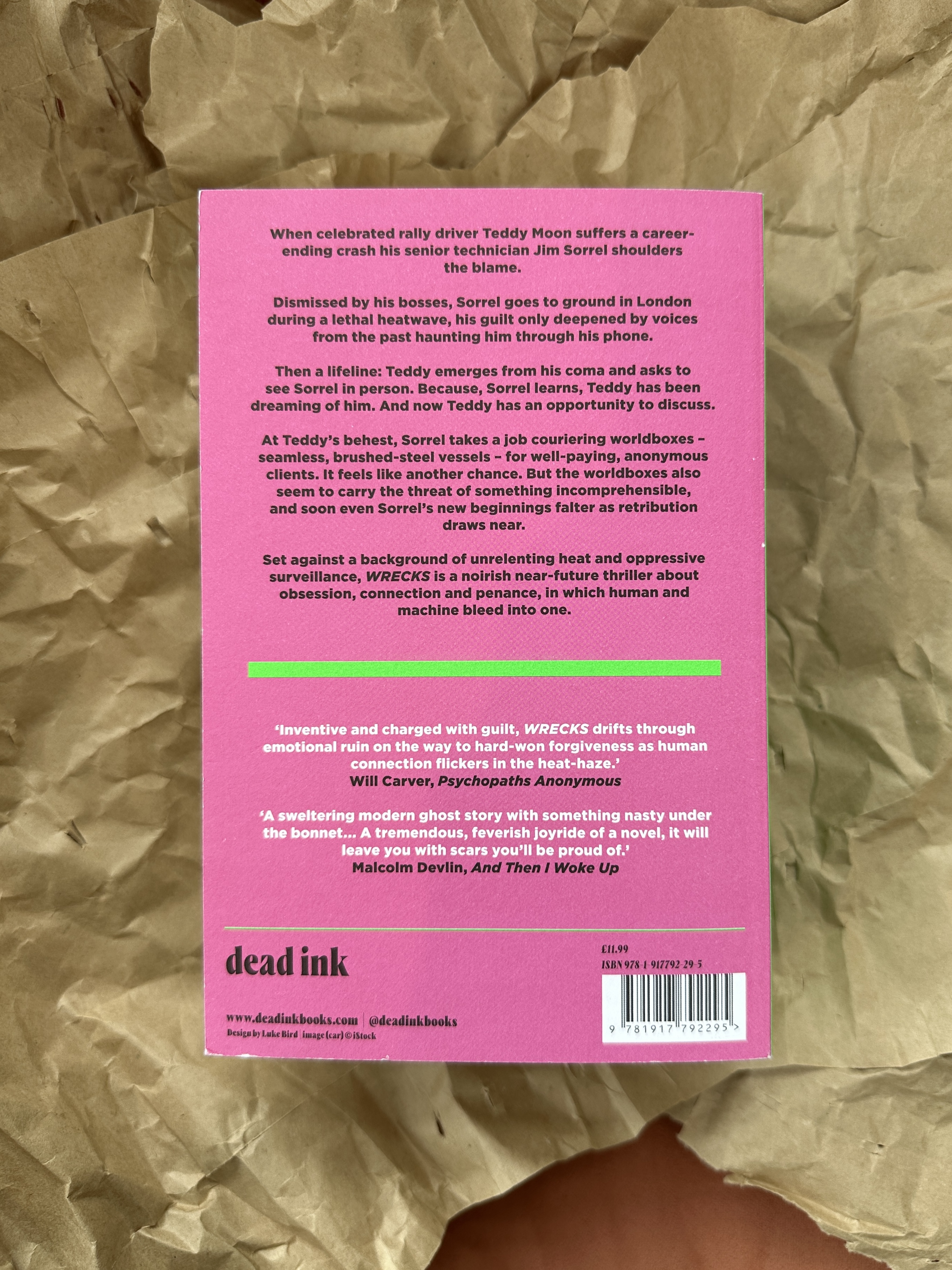
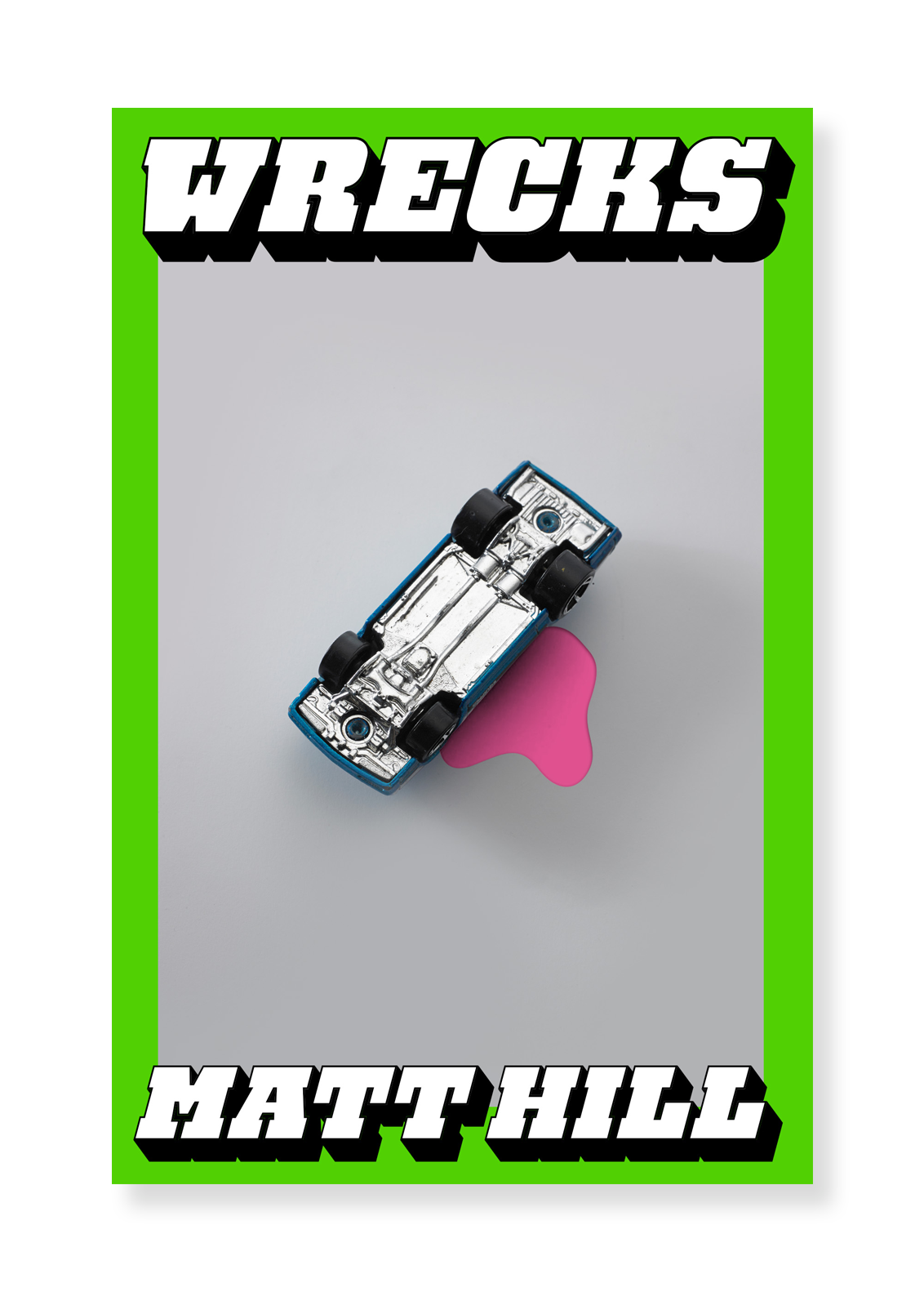
    I’m very happy to share that Wrecks, my new novel, will be published by Dead Ink Books on August 6th this year. The book’s cover – like Lamb’s – was designed by the genius Luke Bird. (I’m not meant to have favourites, but it’s possibly my favourite.)

    I started sketching Wrecks‘ early scenes during the torrid first weeks of Covid, initially as a kind of desperate response. Later, the draft became a not-very-subtle state-of-the-nation diatribe which changed course with every month, like everything else did. Eventually it became another part-abandoned manuscript I was compelled to return to and complete when Lamb was picked up for publication.

    As always, I find it tricky to describe what the book is, so I’ll reach for what it isn’t. If Lamb was wet and mulchy, then Wrecks is sticky, oppressive. Most of its writing happened in a deeply unsettled period for me, personally and professionally, which has no doubt dictated its shape; I keep reminding myself that novels can function as diaries as well as imaginings.

    The novel plays about with elements of horror, crime thriller, cyberpunk and ghost story, while making several attempts to rehabilitate the dream sequence. And, of course, it circles back to some perennial subjects of mine: vehicles, transformations, the grim promises of a half-empty industrial unit, images of the future with zero appeal to ‘making predictions’…

    Read more about Wrecks over here and, if you’re keen, please consider pre-ordering a copy from Dead Ink direct, or from your local bookshop. More than ever, pre-orders are vital to writers and the independent publishers who champion our work.

  • Lamb audiobook released

    Delighted to report that Lamb is now available as an audiobook from W.F. Howes. Jump in for nine-and-a-bit hours of mossy, melancholy weirdness, narrated in perfect northern by the wonderful Jonathan Keeble.

    Listen on Audible, Spotify, Apple, or wherever else you get yours.

  • Chris

    Christopher Priest, one of our most important writers, has died. 

    I met and came to know Chris through my friendship with his wife, Nina. Over the last ten years, the two of them have been comrades and occasional mentors; I have often said that without their combined influence, I would not be taking my writing anywhere near as seriously. (Chris’s criticism could be fierce, even brutal, though it was always bang-on.)

    He was a hugely sensitive, caring, and passionate man, and ‘old-school’ in the sense that he continued to uphold writing as a true profession, a vital pursuit, a way to capture and so preserve a record of the world. He had little regard for the vagaries of publishing, nor much of its attendant bullshit. And he wasn’t afraid to be honest, even when it costed him – or hurt him. In fact, honesty was his entire mission.

    To mark his passing, I wanted to share some advice Chris emailed to me in 2021, when I was really struggling. It perfectly demonstrates his generosity, the value he placed on quality, and his powerful support for other writers.

    The following worked wonders, and has completely changed my practice.

    Good, clear English is a gateway to literature. You can elaborate, mix up, mangle, experiment, drag through the gutter, rise to the empyrean, but keep the English good. You should put whatever weight you think appropriate on this thought.

    (NB: I do not see myself as a paragon of virtue on the subject. I make the same mistakes as anybody. But it’s a daily responsibility.)

    The best, most serious advice I can give is this. Create a mental image of the whole book: what you want it to say, who the characters are, where the plot will lead, what the main scenes are, what the important elements of the story consist of. Just sit and think about it. Get it in your head. Don’t assume you have already done that a thousand times. You have not.

    This is holism: visualise the MS as a book.

    Then rewrite the whole thing from beginning to end. Work from a hard copy. Never look at previous drafts on your hard disc. Never, EVER, use Copy/Paste from an earlier version, even if you think it’s a good bit that does not need revision, that you think can be transferred across piecemeal. Copy/Paste is a writer’s worst enemy. Retype everything, even the good bits, especially the good bits. You might find yourself retyping, word for word, something from the hard copy. It’s not wasted labour: it’s a confirmation you got that bit right. But most of the time you will be correcting, amending, improving … both at a sentence level and within the wholeness of the book. You will find that every line, paragraph or page will have several tiny but significant improvements. And you know what lies ahead in the book: build in anticipations. You know what’s behind you: refer to it subtly, be consistent, develop past themes. This is a supreme experience of writing: until you try it you have no idea what a source of creative satisfaction you will gain from it.

    Do not cheat, fall foul of temptation and copy in bits from the old draft, because you will be cheating yourself.

    I’ll miss him, and I won’t be alone. Sending love to his family and friends.

  • Launch round-up

    After lots of Lamb-related events in October and early November, I’m using this week to take stock and be thankful. For me, publishing a novel is always a weird experience: exciting, exposing, relieving, and surreal. And as various processes wind down, you’re left with a tiny thread of loss, a lot of gratitude, then a slow taper back to normal life (and the next manuscript).

    But this has been my first time doing any kind of tour, and I want to mark how special that’s been.

    This was the display in the Dead Ink bookshop on Smithdown Road, Liverpool, for an ace publication day launch with Gary Budden and the whole Dead Ink crew. (Those are the actual letters that were photographed for the cover!). Following this were events at Dark Peak Books in Glossop (thanks to the amazing Mel!); a night at Burley Fisher in Hackney with the wonderful Dan Coxon; my first-ever visit to MCM Comic-Con London; and a unique signing event in Liverpool’s beautiful Sefton Park Palm House. We finished up in Nottingham with the wonderful Teika Marija Smits at Five Leaves Bookshop – many thanks to bookshop owner Ross and Teika (pictured with me below!) for a brilliant night.

    Elsewhere, Lamb has picked up a belting Guardian review, a generous piece from the unbeatable Nina Allan, a deeply thoughtful write-up by Jonathan Thornton at The Fantasy Hive, and this kind review from The Eloquent Page. I also joined Field zine’s Field Ramble podcast, then went deep on Lamb‘s inspirations, writing the north and what’s coming next on the Interzone Pod.

    Heartfelt thanks to everyone who’s posted about, shouted about and continues to support the book. In a time of profound suffering and sometimes unfixable heartache, sharing this personal stuff, my good fortune, can feel insensitive, even trivial. But I’m incredibly grateful.

    Lamb is on sale direct from Dead Ink, your local independent, and everywhere else that sells books.

  • Lamb out now

    My new novel Lamb is out today from the mighty Dead Ink Books. You can pick up a copy direct from Dead Ink, or through their snazzy new bookshop website. Or you can grab it anywhere else you like to buy your books (ideally your local independent!).

    There’s a proper blurb for the book over here, but I’d call it a story of parenthood, grief, memory and renewal. Its general mood is melancholy, tending towards that unmoored, homesicky feeling you experience when life or circumstances change too quickly. There’s also a weird cat.

    Lamb was originally conceived as a fictional oral history about a small northern town being destroyed by a strange bioweapon and/or moss-witch, and an attempted government cover-up via ultranationalist militiamen. The idea was partially inspired by the then-fresh Brexit mess; the 1944 Waffen-SS massacre of French civilians in Oradour-sur-Glane; and mostly by Svetlana Alexievich’s masterful Voices from Chernobyl, an oral history of the 1986 Chernobyl nuclear disaster, which I became obsessed with (and which I’ll always rave about).

    As work progressed, though, it became pretty clear that much of that early containment/quarantine stuff was getting in the way of an increasingly personal story about three generations of one family. And so, following lots of feedback and good advice, I stripped the novel right back to its heart. Five years, one pandemic and many (many) drafts later, the book now focuses on a complicated but tender son-mother-grandmother relationship, and asks – among other things – whether it’s possible to outrun your upbringing.

    Lamb has been a long while in the making, then, and today feels surreal and special. I’m hugely grateful to everybody involved, particularly Dead Ink’s commissioning editor Harriet, my agent Max, cover artist Luke Bird, and the friends, early readers and booksellers who’ve been shouting about it.

    Lamb launch events

    Over the coming weeks, I’ll be popping up in a few places north, south and Midlands-ish.

    12/10: Liverpool launch at Dead Ink Bookshop, 6-8pm – get tickets

    14/10 : Glossop signing at Dark Peak Books, 2-4pm

    19/10: London launch event at Burley Fisher Books with Dan Coxon, 6.30-9pm – get tickets

    27/10: MCM Comic-Con London

    29/10: Liverpool signing at Sefton Park Palm House, 1pm – find out more

    01/11: Nottingham event at Five Leaves Books with Teika Marija Smits, 7-8.30pm – get tickets

  • Lamb to Dead Ink

    Beyond chuffed to share that Liverpool-based Dead Ink Books will publish my fifth novel Lamb this October, and another novel in 2025. Here’s the announcement in The Bookseller.

    I’ve admired Dead Ink since reading Naomi Booth’s brilliant Sealed – a novel that manages to make a horrifying apocalypse feel scarily intimate – and feel very lucky to have the team’s faith in my own project.

    Because it has been a project, this weird little book. I started writing notes for it back in 2018, and have been round the houses ever since. The finished novel isn’t just a third draft, but the third complete rewrite – and that’s before you count my ‘just-one-more’ passes, structural edits, and the (many) times I stroppily abandoned it.

    This owes a lot to my bloodymindedness, of course, but I’m also indebted to the friends who’ve kept me at it. (Never believe anybody who tells you writing fiction is a lonely pursuit.)

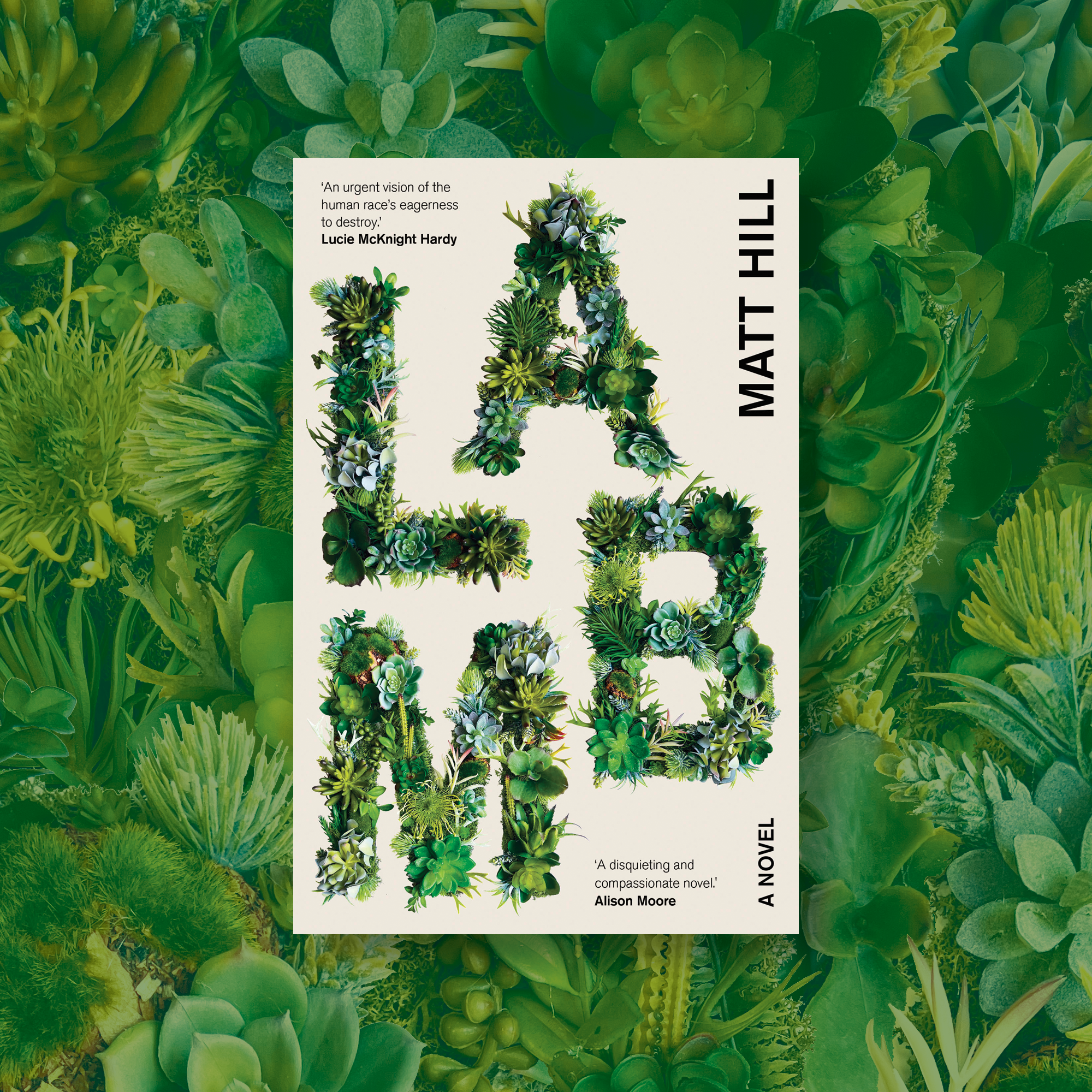
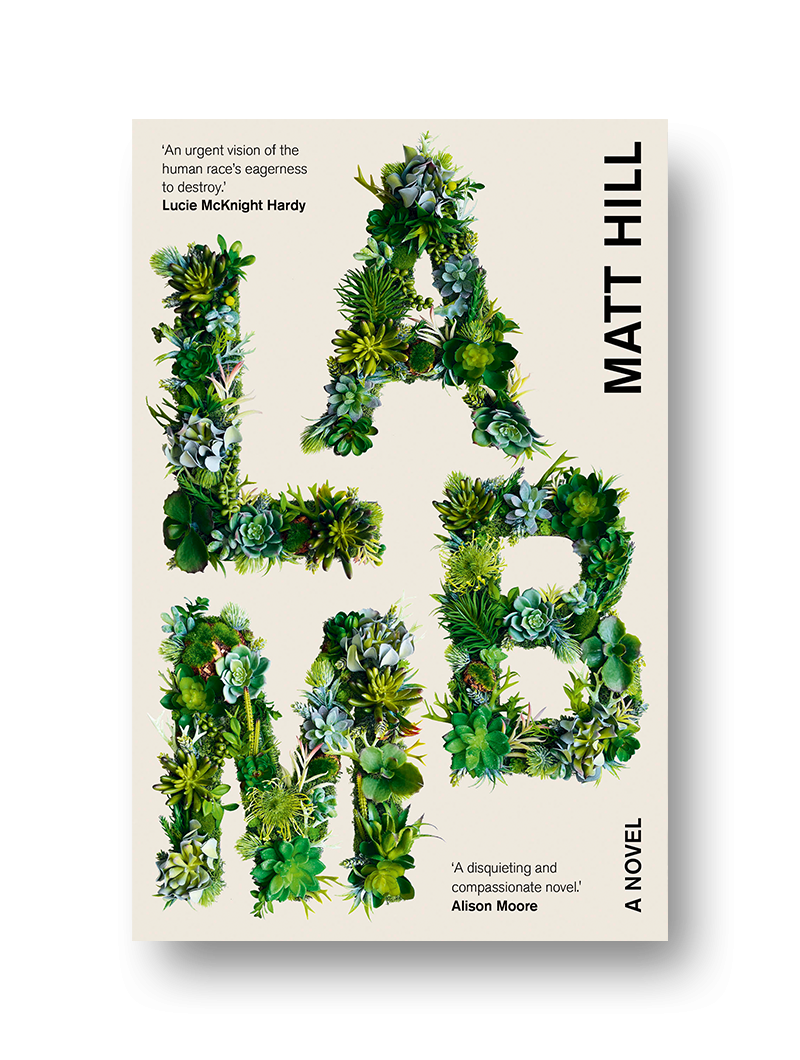
    Anyway, here’s the novel’s cover, created by the phenomenal Luke Bird. Fun fact: the letters were handcrafted by a florist, then photographed.

    Check out the full blurb and pre-order over at Dead Ink’s site.

  • Resilience

    I recently joined running coach, yoga teacher and mountain leader Jen Scotney to record an episode of Resilience Rising, a podcast that digs into what it means to be resilient, or at least to fail, or succeed, or both. 

    We chatted about the trials and strange affirmations of (traditional) publishing, dealing with tricksy one-star reviews, the occasional need to sit on your hands, and why you might carry on writing despite it all.

    Thanks for having me on, Jen!

    You can stream the full episode over here.

  • Newer New Worlds

    Forthcoming from PS Publishing is the first in a new anthology series inspired by the infamous New Worlds magazine of the 1960s and 70s. The book packs in fresh stories from Alan Moore, Gwyneth Jones and Michael Moorcock himself. It also includes my post-floods short ‘The Gridge’, which was written in late 2019, before… all this. (And yes, I’m very much tagging along.)

    Check out New Worlds over here.

    Meanwhile, we carry on. I’ve had my head down on two novel manuscripts this last year. The first of these was completely abandoned before a manic revival (see: total demolition, two full rewrites) over spring and summer, and now feels like a dear, if challenging, friend. The second manuscript is some attempt to wrestle with the last two years, and is next on the chopping block.